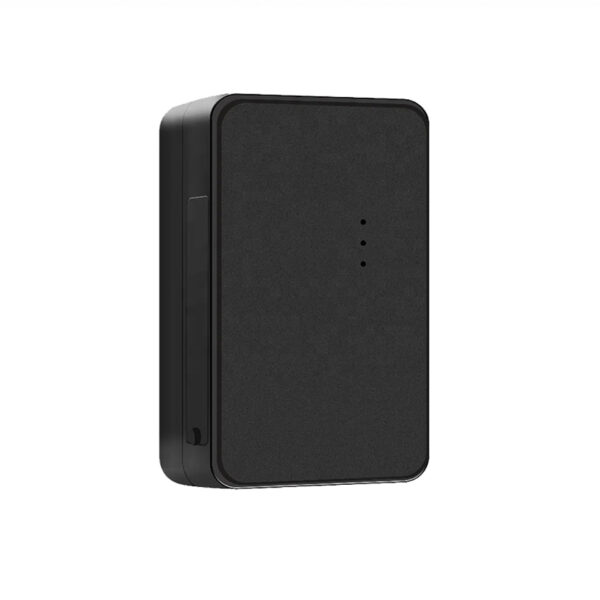
There's a trade-off between update frequency and battery life — with rechargeable devices, you can have frequent updates or long battery life, but not both. The more often a tracker reports to the platform, the faster the battery drains. When configured correctly, our rechargeable devices can last over a year between each recharge.
Adaptive Mode
Adaptive tracking improves battery life without sacrificing real-time updates. The device stays in sleep mode while it is not moving. As soon as motion is detected, it wakes up and begins reporting in real time.
This setup works especially well for assets with occasional use. For example, a boat or trailer in storage can be tracked for more than 12 months on a single charge.
Fixed Interval Mode
In this mode, motion detection is disabled entirely and the device simply reports at a fixed interval. It's ideal when you don't need real-time visibility or precise speed/distance reporting.
Cars and Trucks
If you're tracking a car or truck, we strongly recommend an OBD2 device instead. These draw power directly from the vehicle, so there's no battery to recharge.
Warning
Be cautious of listings that advertise real time updates and a long battery life of multiple months on the same spec sheet without further explanation. Usually a "long battery life" figure of multiple months applies only in standby mode when the device is not reporting at all. Real-time, second-by-second tracking depletes batteries rapidly. Both numbers can be technically true, but they don't apply at the same time.